
Pope Leo XIV and Trump Square Off Over War and the Role of Faith in Politics
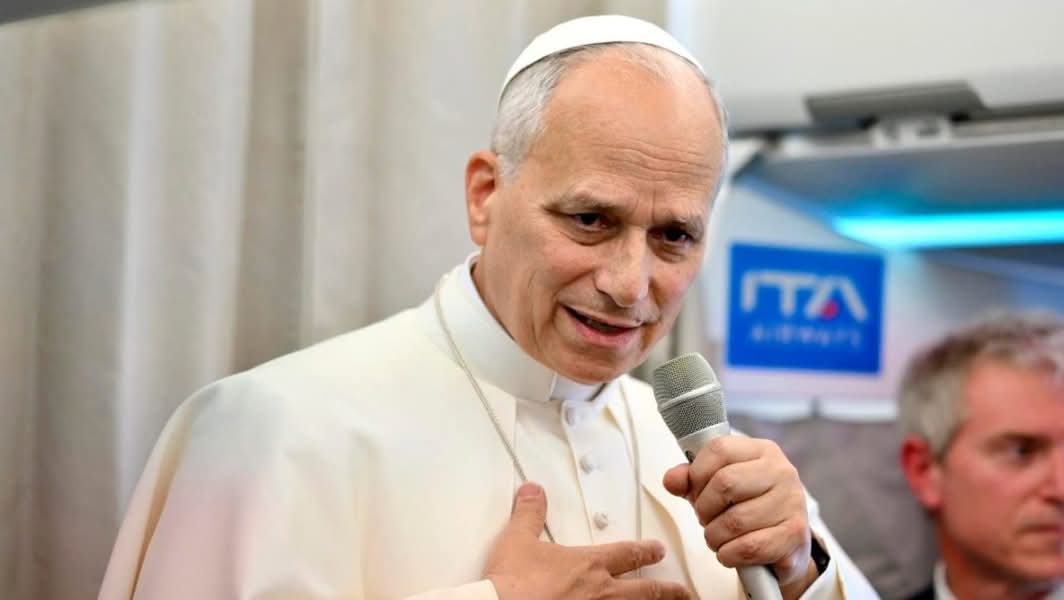
When the leader of the world's 1.4 billion Catholics and the President of the United States publicly clash over war and religion, it affects more than just headlines — it shapes how Americans understand the relationship between political power and moral authority. For the first time in history, both figures at the center of this dispute are Americans, making this standoff uniquely relevant to voters at home.
The dispute centers on sharp disagreements over U.S. threats of military action against Iran, with Pope Leo XIV calling the rhetoric "truly unacceptable" and President Donald Trump firing back by calling the pope "weak" and politically biased. What started as a difference in tone has grown into one of the most high-profile public disagreements between a sitting U.S. president and a reigning pope in modern memory.
How the Conflict Started
On Easter Sunday, Trump made headlines by threatening widespread bombing of Iran's infrastructure and what he described as the "eradication" of a "whole civilization." The pope responded publicly, calling that kind of language unacceptable. The back-and-forth that followed played out across social media and international press briefings, drawing attention from leaders and citizens around the world.
Trump took to his Truth Social platform to label Pope Leo XIV "Weak" and claimed the pope was captured by the "Radical Left." He also suggested, without evidence, that Leo owed his papal election to Trump himself. "I don't want a Pope who criticizes the President of the United States because I'm doing exactly what I was elected, IN A LANDSLIDE, to do," Trump wrote, urging the pontiff to "focus on being a Great Pope, not a Politician." It is worth noting that Trump's 2024 election victory was not considered a landslide by standard electoral measures.
The pope did not back down. Speaking to reporters aboard a flight to Algeria, Leo XIV addressed the dispute directly.
"To put my message on the same plane as what the president has attempted to do here, I think is not understanding what the message of the Gospel is. And I'm sorry to hear that but I will continue on what I believe is the mission of the church in the world today."
He also made clear he was not intimidated. "I'm not afraid of the Trump administration," Leo told reporters en route to Africa on Monday, "or of speaking out loudly about the message of the Gospel, which is what the Church works for."
Who Is Pope Leo XIV?
Born Robert Francis Prevost, Pope Leo XIV became the first American-born pope when he was elected on May 8, 2025. However, the new pope has spent much of his life outside the United States, including years serving as a bishop in Peru, which has heavily shaped his worldview.
Before his election, Prevost was not shy about weighing in on global issues. In 2022, while serving in Peru, he appeared on a television program called "Weekly Expression" and directly condemned Russia's actions in Ukraine, calling it an "imperialist invasion in which Russia wants to conquer territory for reasons of power given Ukraine's strategic location." That footage resurfaced in Italian media after his election.
Earlier in 2025, then-Cardinal Prevost also shared a news analysis on social media that criticized Vice President JD Vance's position on immigration. The headline he shared read: "JD Vance is wrong: Jesus doesn't ask us to rank our love for others." These actions painted a picture of a church leader willing to engage directly with political debates long before he became pope.
Trump's Reaction to Leo's Election
When Prevost was named pope, Trump initially celebrated the news. On May 8, 2025, he posted on Truth Social: "Congratulations to Cardinal Robert Francis Prevost, who was just named Pope. It is such an honor to realize that he is the first American Pope. What excitement, and what a Great Honor for our Country. I look forward to meeting Pope Leo XIV. It will be a very meaningful moment!" He later told White House reporters that he was "a little bit surprised and very happy" about the selection.
That warm reception did not last long. Within days, Trump began claiming credit for Leo's election, saying, "He wasn't on any list to be Pope, and was only put there by the Church because he was an American, and they thought that would be the best way to deal with President Donald J. Trump." That claim conflicts with how the Vatican's papal election process actually works and ignores the independence of the College of Cardinals.
A Pope Who Speaks to the World, Not Just America
One of the clearest signals of how Leo XIV sees his role came through something as simple as language. When he appeared on St. Peter's balcony for the first time as pope, he did not address the crowd in English. He began in Italian, then switched to Spanish to greet the people of Peru. His first Sunday blessing was delivered almost entirely in Italian, with only a brief English phrase before returning to Italian and Spanish.
That choice was widely seen as deliberate — a statement that this pope considers himself a shepherd to the entire world, not a representative of American interests or an extension of American political culture.
His first public words from the balcony set the tone for the kind of papacy he intends to lead: "Peace with you all … the first greeting of the risen Christ, the Good Shepherd who gave his life for the flock of God." He followed that by calling attention to the wars in Ukraine and Gaza, describing them as signs of a "third world war in pieces." On the Monday after his election, speaking to journalists, he quoted the Sermon on the Mount: "Blessed are the peacemakers."
The Divide Sharpened During Holy Week
The gap between the two men became especially visible during the days surrounding Easter. During Palm Sunday, Leo XIV described Jesus as the "King of Peace" and issued a stark warning: God "does not listen to the prayers of those who wage war, but rejects them, saying: 'Even though you make many prayers, I will not listen: your hands are full of blood.'"
At roughly the same time, Trump hosted conservative religious leaders at the White House, where one adviser compared him to a persecuted savior. Then came Trump's Easter threats against Iran, which prompted Leo's public condemnation and set off the escalating exchange that has since captured international attention.
The dispute raises broader questions for American voters about how political leaders and religious institutions interact — and where the boundaries of each should lie. Whether one agrees with the pope or the president, the fact that these two Americans are publicly debating war, faith, and moral responsibility on a global stage is something few could have anticipated when Leo XIV was elected just weeks ago.